
Neither do we.

Olivia Lazard is a planetary security expert, researcher, writer and founder of Transition Intelligence. Her work examines how ecological disruption, technological acceleration and geopolitical competition are reshaping power, planet, security and governance in the twenty-first century.
For more than a decade, she worked across Africa and the Middle East on conflict, political settlements and the political economies of violence. Research spanning the Congo Basin, the Sahel, the Levant and the Gulf led her to a wider inquiry: how crises often treated as separate – climate disruption, resource extraction, technological competition, organised crime and geopolitical fragmentation – are increasingly interacting as part of a deeper planetary transformation.
Her work focuses on this emerging strategic terrain, where changing ecological conditions are altering the material foundations of power and where competition over critical minerals, energy systems, digital infrastructure, artificial intelligence and ecological resilience is beginning to reshape international order. She contributes to the development of planetary security as a strategic field and develops new concepts and forms of intelligence for navigating the transition from an international to a planetary age.
Through Transition Intelligence, Olivia works across research, strategic foresight, private diplomacy and institutional experimentation. She collaborates with governments, international organisations, philanthropic actors, scientists and innovators to explore how security, democratic agency and human dignity can be preserved while political and economic systems adapt to rapidly changing planetary conditions.
Her work combines field experience, geopolitical analysis, systems thinking and long-horizon foresight. She is the originator of the concept of Anthropolitik, which examines realpolitik under planetary conditions, alongside a broader body of work on the future of peace, security and political order.
Olivia holds degrees from McGill University, Sciences Po Paris and the London School of Economics. She is a Fellow of the Berggruen Institute and the Imperial War Museum Institute, as well as a TED speaker.
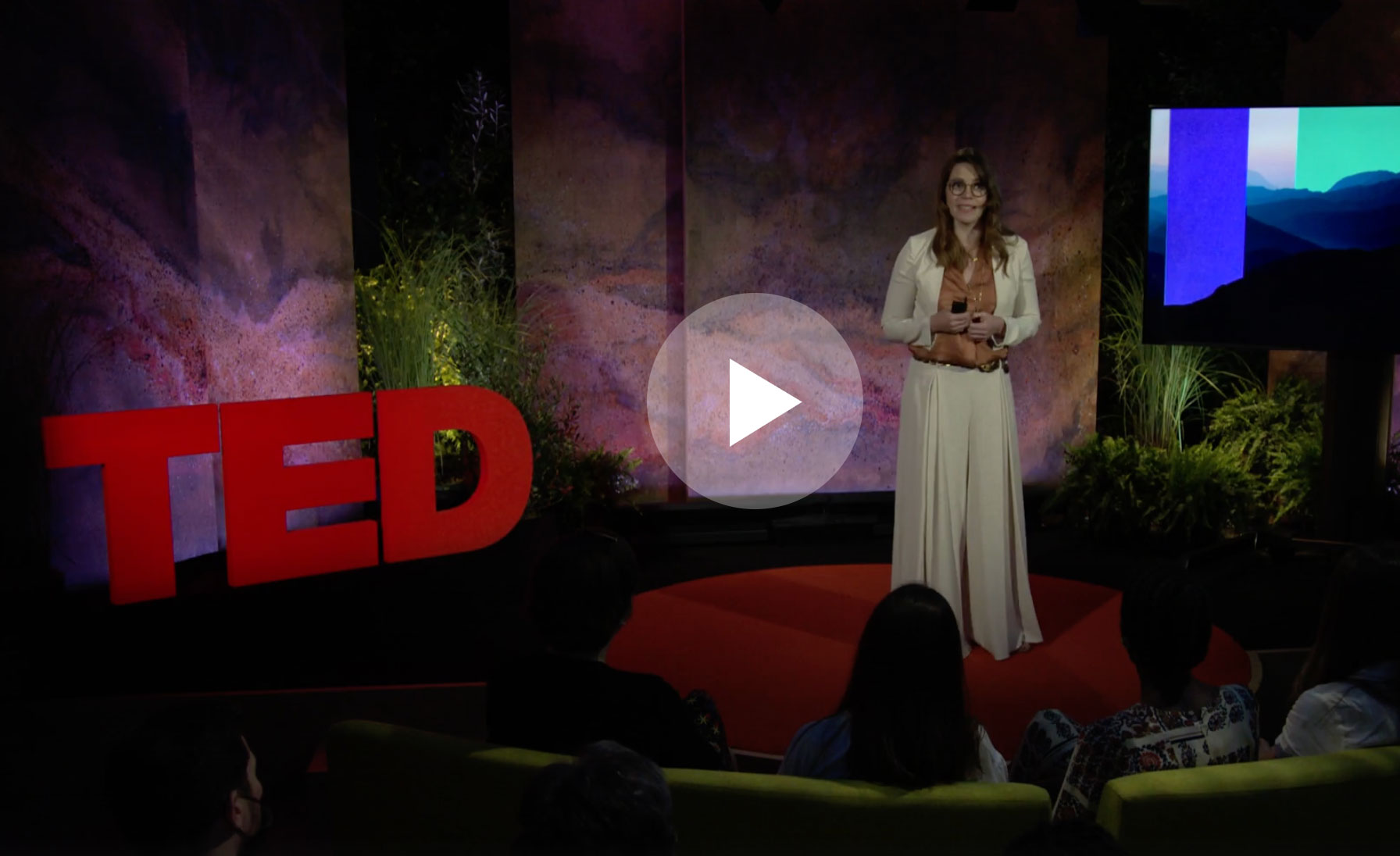

Heïdi Sevestre is a glaciologist, explorer and science communicator whose work focuses on the rapidly changing cryosphere and its implications for climate, ecosystems and human societies.
She works between scientific research, field exploration and public communication, bringing insights from some of the world’s most remote frozen environments into wider debates about planetary change. Her expeditions have taken her across polar and glaciated regions, most recently on an 80-day ski-kite traverse of Antarctica completed in January 2026.
Heïdi’s work has been recognised internationally. She received the Shackleton Medal in 2022, the Prix du Rayonnement Français for the environment in 2023, was named a European Young Leader by Friends of Europe in 2024, and joined the Explorers Club 50 in 2026 – which recognises 50 people changing the world.
Alongside her fieldwork, she is a prominent science communicator through conferences, films, books and public outreach. She is the author of four books in French, including Découvre les glaciers avec Heïdi Sevestre (Editions Plume de Carotte), Demain C’est Nous (Editions du Faubourg), Sentinelle du Climat and Sentinelle – voyage au coeur des glaciers (HarperCollins France).

Nils Gilman is a historian, strategist and leading thinker on planetary governance, global order and strategic foresight. His work examines how ecological, technological and geopolitical transformations are challenging institutions built around the nation-state and what new forms of governance may be required to address problems operating at planetary scale.
With Jonathan Blake, he co-authored Children of a Modest Star (Stanford University Press, 2024), which develops the concept of planetary subsidiarity: matching governance capacity to the scale at which shared problems must be addressed. His forthcoming book, Three Visions, One Planet, examines competing political projects for an international order undergoing profound transformation.
Nils has spent more than two decades working at the intersection of strategic foresight, scenario planning and institutional change. He was Research Director of Global Business Network, Associate Chancellor at UC Berkeley and Executive Vice President of the Berggruen Institute, and has designed futures and scenario exercises for governments, think tanks and international institutions.
A historian by training, his work combines long-range analysis of political economy and international order with methods designed to expand strategic imagination and surface hidden assumptions about the future. He is also the author of Mandarins of the Future (Johns Hopkins University Press, 2004), writes the Small Precautions Substack and co-hosts the Futurology podcast.

Ali Bin Shahid is a systems architect working across water, ecology, energy and land systems to design interventions that restore resilience in complex environments.
He co-founded PSKL Water for All, which works on landscape-scale water regeneration through unpowered, low-emission harvesting systems, and LandIQ, which integrates data on water, soil, crops, energy and carbon to identify where targeted interventions can generate effects across several interconnected systems at once.
His work focuses on what he describes as climate trigger points: places where relatively small, well-designed interventions can help restore equilibrium across coupled ecological systems. The underlying premise is that the same interdependence that can transmit degradation through a landscape can also transmit recovery. Ali and Olivia co-published a major study on regeneration in the Gulf via climate trigger points – a first-of-its-kind study.
Ali has worked on projects across Pakistan, Spain, Portugal, Jordan and Colombia. His current research explores the role of ecosystems as active climate regulators and the potential for regeneration to become a strategic tool for adaptation, resilience and long-term systems stability. He also publishes the climate science Substack Regenesis.

Jessica Seddon is an institutional strategist and expert on environmental governance, science-policy integration and the design of institutions capable of responding to complex planetary challenges. She is Senior Lecturer and Director of the Deitz Family Initiative on Environment & Global Affairs at the Yale Jackson School of Public Policy and a co-founder of The Institutional Architecture Lab (TIAL).
Her work examines how new data, technologies and analytical tools can reshape the way societies understand and govern environmental systems. Across academic, advisory and program leadership roles in India, the United States and internationally, she has focused on building institutional arrangements that connect scientific knowledge with public policy, social innovation and decision-making.
Jessica’s recent work has centred on the governance of the atmosphere, spanning climate change, air quality and climate intervention. She previously built and led the global air quality program at the World Resources Institute, co-chairs the Global Air Quality Forecasting and Information Services initiative of the World Meteorological Organization, and co-chairs the Oversight Committee for the Exploring Climate Cooling Program at the UK Advanced Research and Invention Agency (ARIA).
Earlier in her career, she co-founded and led Okapi, an India-based strategy group focused on institutional design for social innovation. Her research and writing span environmental regulation, infrastructure, political economy, technology and governance, with publications in leading academic and policy outlets including Foreign Affairs, Harvard Business Review and Stanford Social Innovation Review.
Jessica holds a Ph.D. in political economy from Stanford University Graduate School of Business and a B.A. in government and Latin American studies from Harvard University.

Gabriella Seiler is an independent advisor and systemic entrepreneur working at the intersection of environment, technology, finance and institutional change. She brings more than two decades of experience across climate and infrastructure finance, innovation, public policy and venture building, with a career spanning Brazil and the United States.
Her work focuses on how complex, interconnected systems can be financed, governed and coordinated across sectors and scales. She has worked across the private sector, multilateral institutions and government, including roles at Morgan Stanley, Vinci Partners, the International Finance Corporation and Brazilian public institutions.
Gabriella recently led the design of a new science-policy institute for tropical ecology at Instituto Serrapilheira. She was also an early founding partner and COO of Kunumi, a pioneer in applied artificial intelligence, where she led operations, corporate development and venture incubation and helped steer the company through its acquisition by Bradesco in 2023. Earlier, as Director of Infrastructure Investing at Vinci Partners, she worked on financing and implementation across energy, water and sanitation, and logistics.
Her current work explores the coordination mechanisms required for entangled, multi-level systems that cut across conventional institutional and sectoral boundaries. She is an Eisenhower Fellow and a Planetary Fellow at the Berggruen Institute.
Gabriella holds a B.A. in Economics from Duke University and a Master in Public Administration from Harvard Kennedy School.